
REFHYNE 2 Project Workshop, Bilbao, Spain: Key Insights
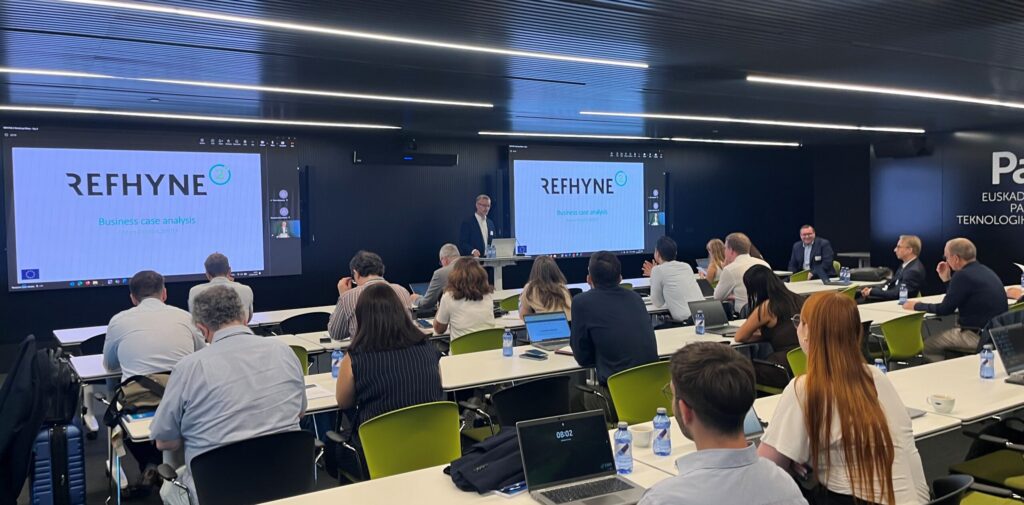
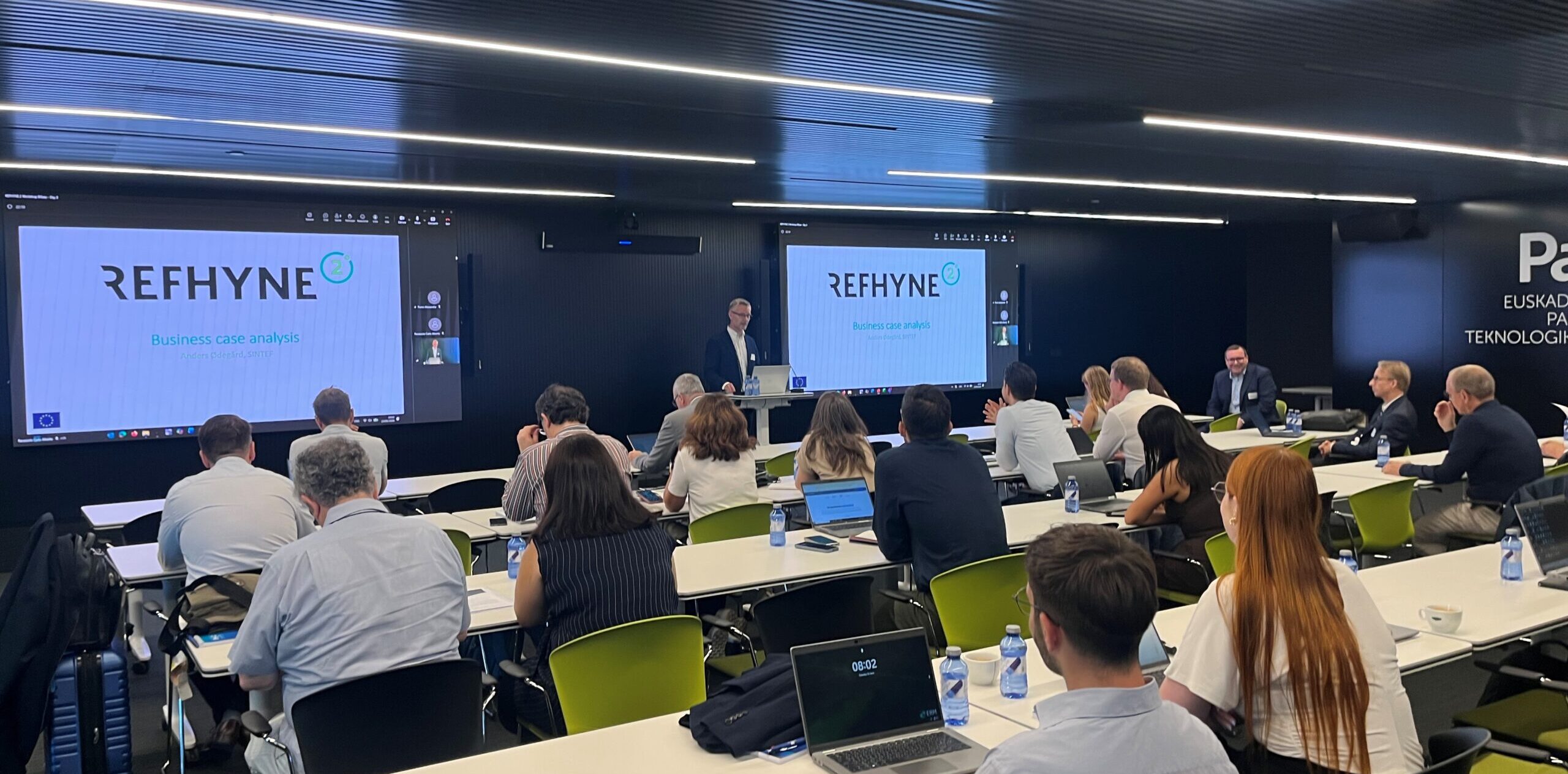
On 22-23 June 2026, attendees gathered in Bilbao, Spain, for a two-day workshop hosted by Repsol and Alba Emission Free Energy. The event brought together project partners, industry representatives and hydrogen experts to discuss the progress of REFHYNE 2 and explore the wider opportunities and challenges associated with large-scale renewable hydrogen deployment.
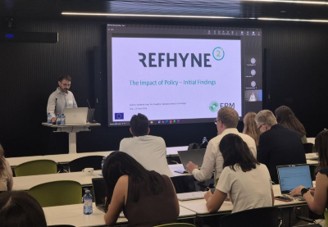
Held at the Energy Intelligence Center (EIC), the workshop provided a platform for technical exchange, knowledge sharing and discussion around the growing role of renewable hydrogen in Europe’s energy transition. Presentations covered the status of the REFHYNE 2 project, developments in electrolyser technology, business case analysis, hydrogen policy, and the growing importance of hydrogen ecosystems.
Speakers: ALBA Emission Free Energy, Repsol, Shell, ITM Power, SINTEF, Concawe, Linde, TECNALIA Research & Innovation and ERM.
1.1 Renewable hydrogen and industrial decarbonisation
A central theme throughout the workshop was the role of renewable hydrogen in supporting industrial decarbonisation, particularly within energy-intensive sectors. Presentations explored how renewable hydrogen can contribute to reducing the carbon intensity of industrial operations. Discussions highlighted the importance of integrating renewable hydrogen with existing industrial systems, while also considering the infrastructure, operational and market requirements needed to enable wider deployment.
Participants also examined the role that refinery sites can play in accelerating renewable hydrogen deployment. Existing hydrogen demand, established infrastructure, and opportunities for integration make refineries an important early application for large-scale electrolysis projects. The REFHYNE 2 project provides a practical example of this approach, with renewable hydrogen intended to be used within refinery operations to support emissions reductions.
A recurring message across the workshop was that scaling renewable hydrogen will require more than advances in electrolyser technology alone. Successful deployment depends on effective integration with industrial processes, access to renewable electricity, supportive policy frameworks and collaboration across the value chain.
1.2 REFHYNE 2 progress and lessons from scale-up
Project partner Shell provided an update on progress at the REFHYNE 2 site at Shell’s Energy and Chemicals Park Rheinland in Germany. Building on experience gained from the REFHYNE 1 10 MW electrolyser, the project is generating valuable insights into scaling electrolysis technologies to significantly larger capacities. Presentations highlighted challenges and learnings relating to electrolyser modules, balance-of-plant systems, refinery integration, safety, permitting and commissioning.
Speakers from ITM and Linde emphasised that scaling up is about more than increasing electrolyser size. Successful deployment requires careful consideration of water management, cooling systems, hydrogen networks, operational flexibility and integration with existing industrial processes. REFHYNE 2 is already providing valuable lessons that can help inform future large-scale hydrogen projects across Europe.
1.3 Understanding the business case for renewable hydrogen
The workshop also examined the economic factors that influence renewable hydrogen deployment. SINTEF presented an ongoing business case analysis undertaken within REFHYNE 2, exploring how project economics are affected by renewable power sourcing strategies, operating approaches and policy frameworks.
“Our analysis shows that the business case for renewable hydrogen is not only about technology – it is fundamentally shaped by policy, power procurement strategies, and how strictly we match renewable electricity. These choices can shift costs by several EUROs per kg and determine whether hydrogen is truly green. The key insight is clear: how you operate the electrolyser matters as much as the electrolyser itself – from PPA design to temporal matching, these choices define both cost and carbon footprint of hydrogen.”
Anders Ødegård, Project Coordinator, SINTEF
Power purchase agreements (PPAs), renewable electricity availability and regulatory requirements have significant influence on the levelised cost of hydrogen. Policy choices, renewable power procurement strategies and electricity matching requirements are vital to project economics. The discussions reinforced an important message echoed across the workshop: achieving cost-effective renewable hydrogen production requires not only technological innovation, but also supportive policy frameworks and well-designed market mechanisms.
1.4 Policy, collaboration and future deployment
Policy was a key topic throughout the workshop, with contributors reflecting on the evolving regulatory landscape for renewable hydrogen in Europe. Discussions explored the importance of certification requirements, RFNBO regulations and support mechanisms that can help bridge the gap between demonstration projects and large-scale commercial deployment.
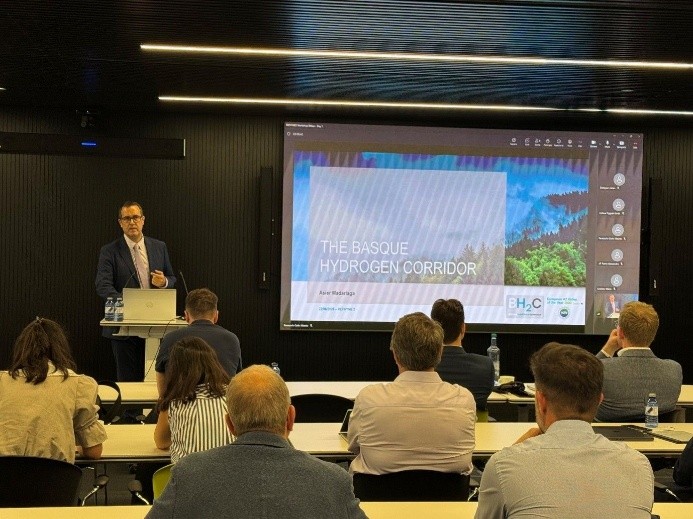
The event concluded with an overview of the Basque Hydrogen Corridor (BH2C), showcasing how regional collaboration can support the development of a broader hydrogen economy. By bringing together industry, infrastructure providers, technology developers and policymakers, initiatives such as BH2C demonstrate how hydrogen ecosystems can create demand, attract investment and accelerate deployment across multiple sectors.
1.5 Looking ahead
The Bilbao workshop highlighted the progress being made within REFHYNE 2 while providing an opportunity for stakeholders to exchange knowledge on the practical realities of deploying renewable hydrogen at scale. As construction progresses and preparations continue towards operation of the 100 MW electrolyser, the project will continue generating valuable technical, economic and policy insights that can support future hydrogen projects across Europe.
See also
REFHYNE 2 Project Workshop, Płock, Poland: Key Insights
Read more...
Final Investment Decision taken by Shell for REFHYNE 2
Read more...
Partners